
Find Property Records in Kirkland
Kirkland property records are maintained by King County and are open to the public at no charge. The King County Assessor holds parcel data, ownership information, and assessed values for every taxable property in Kirkland. Recorded instruments such as deeds, mortgages, and liens are filed with the King County Recorder. You can search most of these records online through county portals, or request copies in person at county offices. This page explains what each office holds and how to access Kirkland property records quickly.
Kirkland Overview
Kirkland Property Records Overview
Kirkland is located entirely within King County, so all property records for the city are held by county offices. The King County Assessor maintains assessment and ownership data. The King County Recorder holds recorded documents. The King County Treasurer handles tax billing and collection. Each office maintains its own database, and for most records, online access is free.
Under RCW 84.40.020, every parcel in Washington must be assessed annually at 100% of true and fair market value as of January 1. Kirkland parcels are no exception. The assessment record -- which includes owner name, property address, legal description, assessed value, and building characteristics -- is a public document. The Washington Public Records Act, Chapter 42.56 RCW, confirms that any person may request and receive these records without having to state a reason.
Kirkland's real estate market has been one of the more active in King County in recent years. Property values, particularly for residential parcels near Lake Washington and the downtown core, have risen considerably. The assessor revalues parcels annually, so the assessed value listed in the online parcel database is typically current within the last year.
King County Assessor for Kirkland Parcels
The King County Assessor is your first stop for Kirkland property records. The assessor's eReal Property portal at blue.kingcounty.com lets you search by street address or parcel number. The results show the owner of record, parcel number, legal description, land and improvement values, lot size, year built, and recent sales. All of this is free, and no login is needed.
The assessor's data is updated regularly, but if you are doing time-sensitive title research, you should confirm ownership through the recorder's office as well. Assessment data and recorded ownership can sometimes differ if a deed has been filed recently and the assessor's roll has not yet been updated. That said, for most routine lookups of Kirkland property records, the eReal Property tool gives you what you need in under a minute.
Appeals of assessed value go to the King County Board of Equalization. If you believe your Kirkland property has been assessed too high, you must file a petition before the deadline shown on your valuation notice. The board is independent from the assessor, and hearings are open to the public. Supporting your appeal with recent comparable sales data tends to strengthen a case.
The King County GIS iMap tool at gismaps.kingcounty.gov/parcelviewer2 is a useful companion to the assessor's portal. You can view parcel boundaries, zoning, aerial imagery, and nearby sales on an interactive map. This is helpful for understanding how a Kirkland parcel fits into its surroundings.
The King County GIS parcel viewer is shown here: King County GIS Center iMap
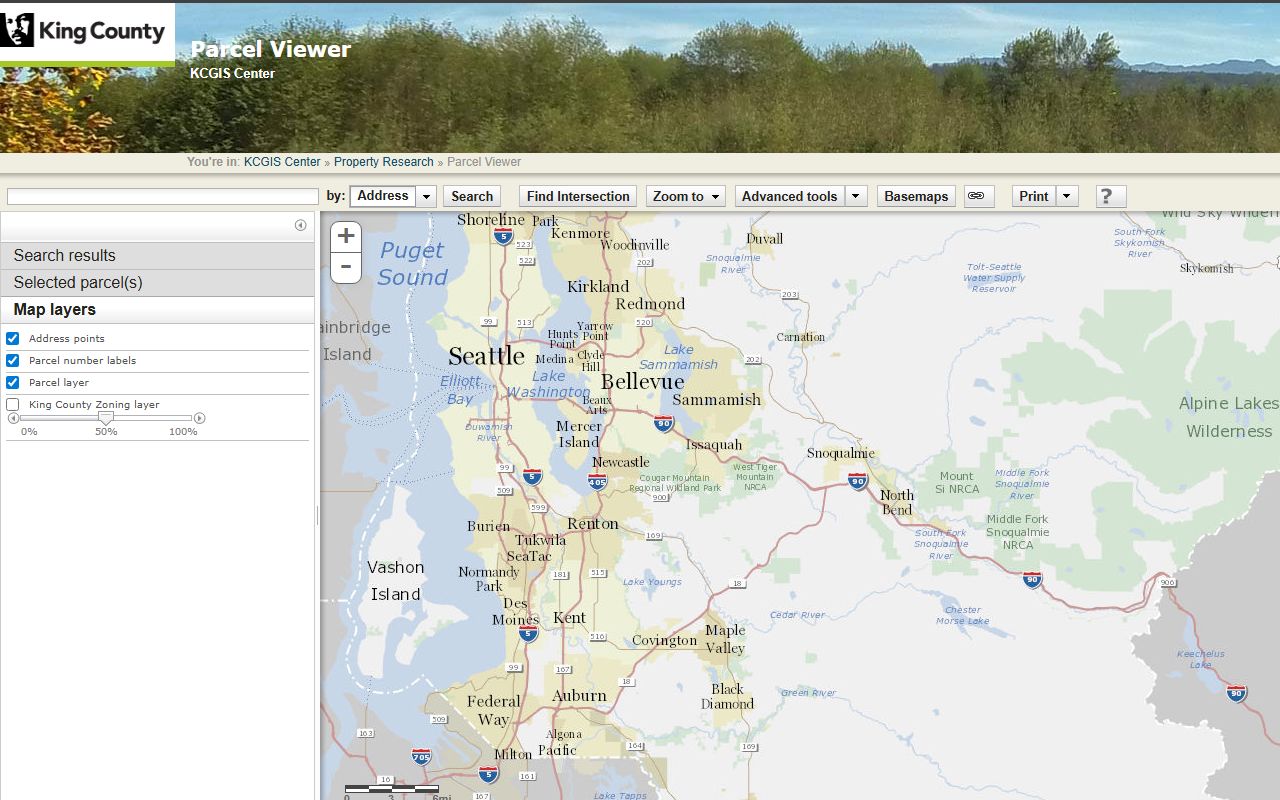 The iMap tool displays Kirkland parcel boundaries, zoning layers, and aerial imagery to support property research.
Kirkland Deed and Document Recording
Any deed, mortgage, easement, lien, or other instrument affecting Kirkland real estate must be recorded with the King County Recorder to be effective against third parties. Under RCW 65.08.070, an unrecorded conveyance is void against a subsequent purchaser who pays value without actual notice. Recording protects buyers and lenders. It also makes the transaction part of the public record so anyone can find it later.
The King County Recorder accepts documents in person at the King County Administration Building in downtown Seattle. Electronic recording, or eRecording, is also available and is used by most title companies for real estate closings. Documents must meet formatting requirements under RCW 65.04.045, including specific margin sizes and a completed cover page. The recorder will not accept a document that fails to meet these standards.
You can search recorded documents for Kirkland properties through the King County Recorder's public search system. Look up by grantor, grantee, parcel number, or document type. Recent recordings are available as scanned images online. Older documents may require an in-person request or a visit to the King County Archives.
The King County Assessor portal is shown here: King County Assessor
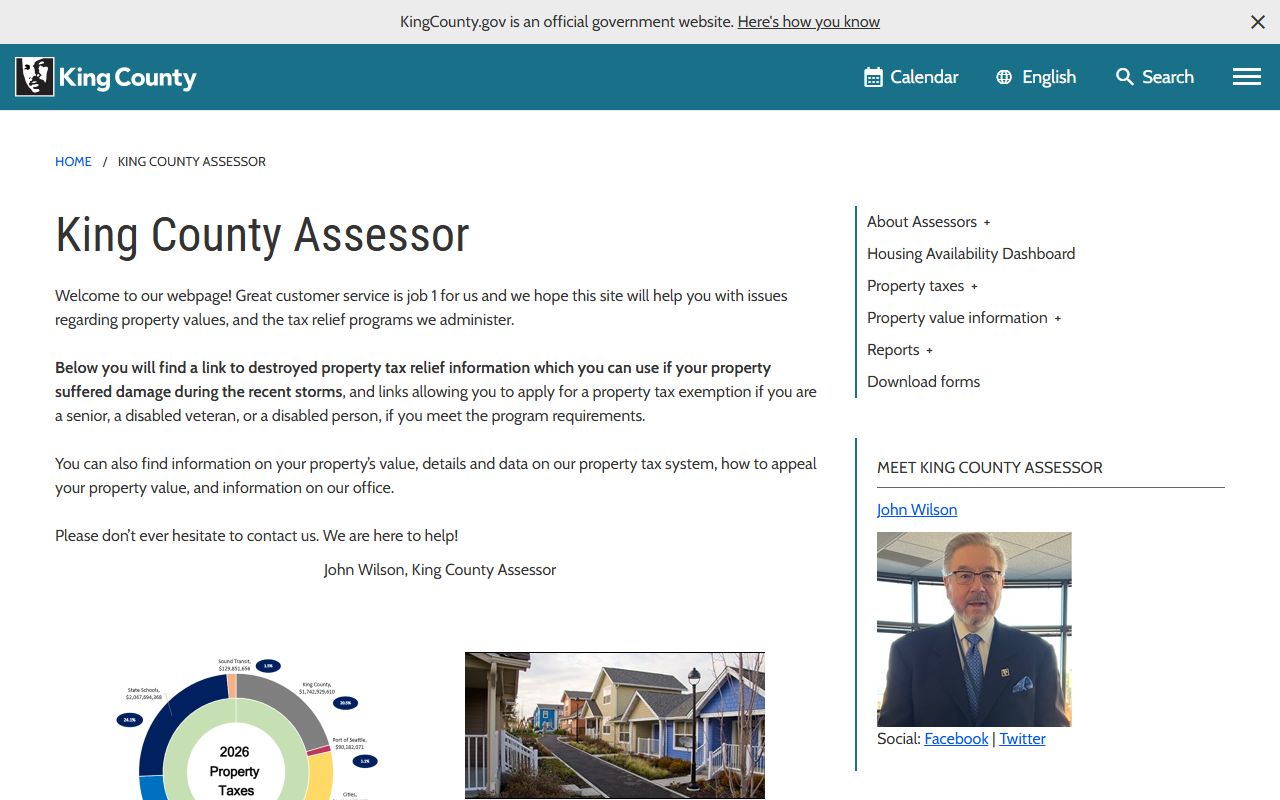 The assessor portal shows current ownership, assessed values, and full parcel details for Kirkland properties.
Kirkland Property Tax Information
The King County Treasurer bills and collects property taxes for Kirkland parcels. Tax statements go out once a year, with payments split in two. First-half is due by April 30 and second-half by October 31. You can pay online, by mail, or in person at the treasurer's office. The King County Treasury website also lets you look up your current tax balance and payment history.
Your Kirkland property tax bill reflects levies from multiple taxing districts. The City of Kirkland, King County, local school districts, fire districts, and library districts all set their own levy rates. These are added together and applied to your assessed value to produce the total annual tax. The combined levy rate can shift from year to year as individual districts adjust their budgets or voters approve or reject special levies.
Real estate excise tax applies when a Kirkland property is sold. Washington uses a graduated REET structure under RCW 82.45. The rate is higher for higher-value sales. At closing, the escrow company typically handles the REET calculation and remittance to the county treasurer. No deed can be recorded until taxes are confirmed current and REET is paid.
Note: The Washington Department of Revenue at dor.wa.gov maintains a directory linking to all county assessor and treasurer websites, which is useful if you need to reach the specific offices that handle Kirkland tax records.
Historical Kirkland Property Documents
The Washington State Digital Archives holds historical property records for the Kirkland area. Digitized collections include early deeds, mortgage records, subdivision plats, and survey notes. You can search by location, record type, or date range for free at any time. The archives are a key resource for chain-of-title research or any project that requires tracing property ownership back several generations.
High-resolution scans in the archive make it possible to read original handwritten documents and early legal descriptions. For genealogy work, these records can tie land ownership to specific family names across different eras. The archive adds new material regularly through partnerships with county recorders, so collections are growing over time.
The King County Archives also holds older recorded instruments for Kirkland parcels. If you need a certified copy of an early deed or a document that predates the current digital system, the archives staff can help locate the original record. Certified copies carry a fee and may take several business days to produce.
King County Property Records
Kirkland property records are maintained by King County. The assessor, recorder, and treasurer each hold separate records related to Kirkland parcels. Visit the King County page for details on search portals, recording fees, office locations, and county-wide resources.
Nearby Cities
These cities are near Kirkland and file property records through King County offices.